Physical Address
304 North Cardinal St.
Dorchester Center, MA 02124
Physical Address
304 North Cardinal St.
Dorchester Center, MA 02124

Ô nhiễm môi trường là chủ đề vừa cấp bách vừa gần gũi với cuộc sống hàng ngày — từ làn khói xe cộ đến rác thải nhựa quanh nhà. Nếu bạn đang học tiếng Anh hoặc muốn học cách diễn đạt những khái niệm này bằng tiếng Anh một cách chính xác và tự nhiên, bài viết này dành cho bạn. Mình sẽ giải thích các từ và cụm từ quan trọng như “ô nhiễm môi trường”, “ô nhiễm không khí”, “gây ô nhiễm”, kèm nguyên nhân và hậu quả bằng tiếng Anh; đồng thời có những đoạn văn mẫu ngắn, dễ nhớ — thậm chí phù hợp cho học sinh lớp 8. Hãy theo dõi để vừa nâng trình tiếng Anh, vừa hiểu rõ hơn về vấn đề chung của chúng ta.
Ô nhiễm môi trường (environmental pollution) là hiện tượng môi trường tự nhiên bị nhiễm bẩn; các tính chất vật lý, hóa học và sinh học của không khí, nước, đất bị thay đổi và gây hại cho con người, động thực vật. Trong tiếng Anh thường diễn đạt đơn giản: “Environmental pollution is the contamination of the natural environment.”
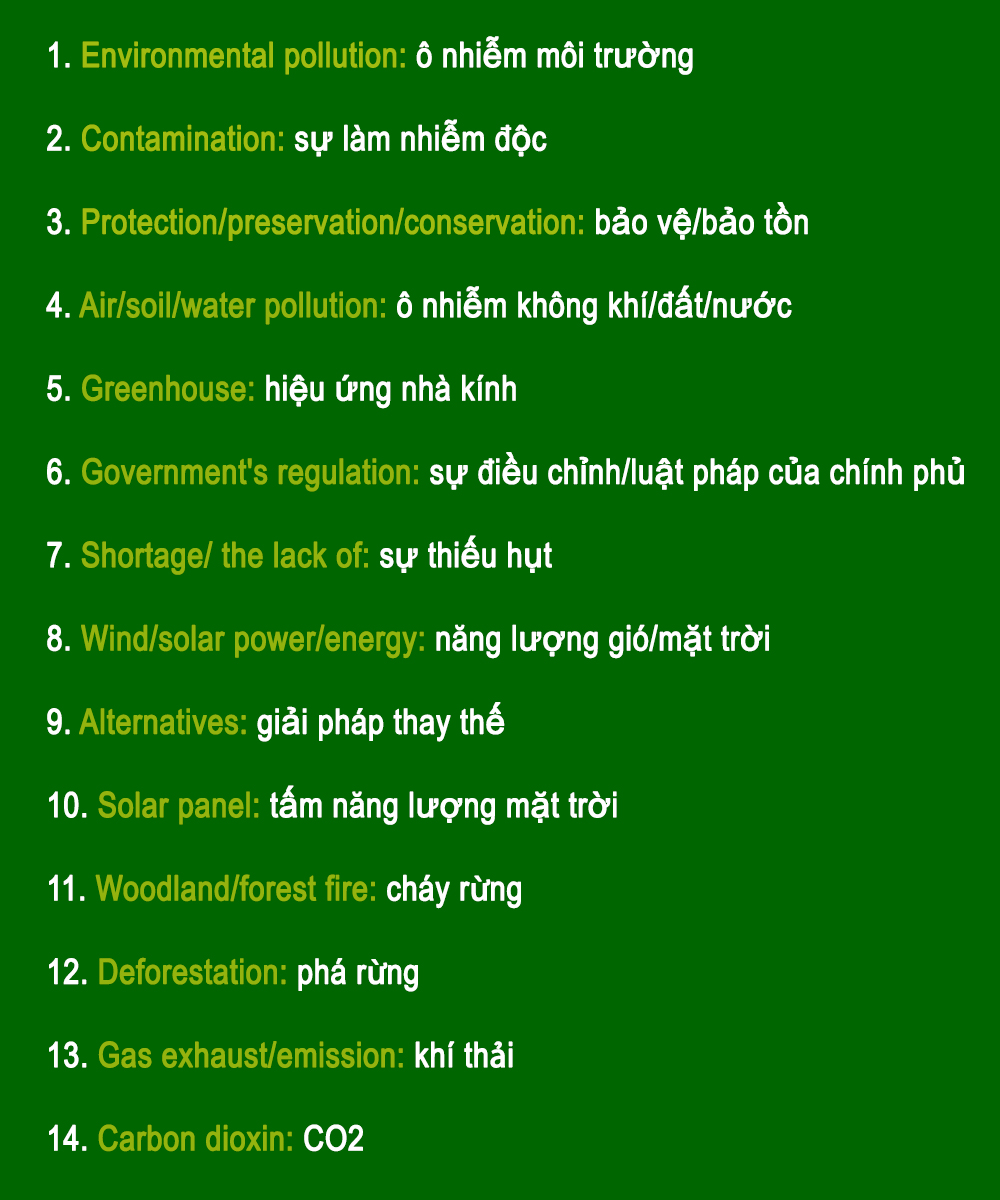
Những loại ô nhiễm phổ biến gồm air pollution (ô nhiễm không khí), water pollution (ô nhiễm nước) và soil pollution (ô nhiễm đất). Một số từ vựng hữu ích bạn nên biết: greenhouse gas emissions (khí thải nhà kính), pollution, affect, contamination, protection/preservation/conservation và renewable energy — đều giúp bạn trao đổi chủ đề này bằng tiếng Anh dễ dàng hơn.
Tại Việt Nam, ô nhiễm đang là vấn đề đáng lo do giao thông, hoạt động công nghiệp, rác thải và nông nghiệp. Hiểu rõ nguyên nhân, hậu quả và các biện pháp phòng tránh — như giảm khí thải, sử dụng năng lượng tái tạo và bảo tồn nguồn tài nguyên — sẽ giúp mỗi người góp phần cải thiện môi trường.
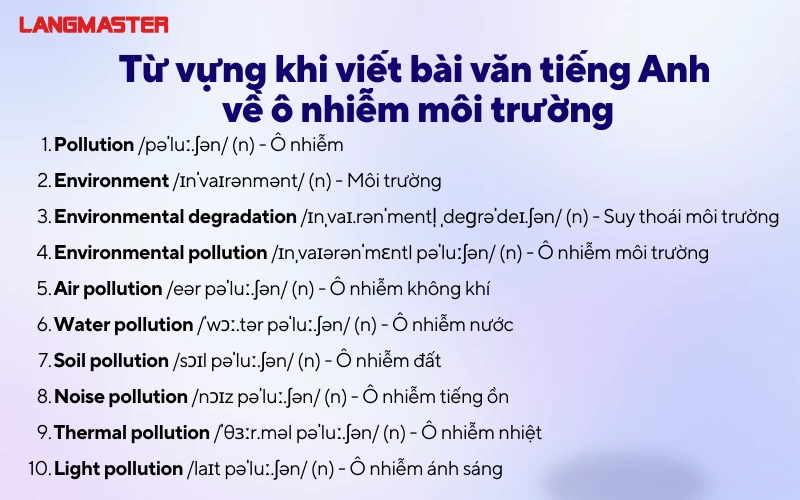
Ô nhiễm không khí trong tiếng Anh là “air pollution” (phát âm: [ɛr pəˈluːʃn]). Đây là danh từ, chỉ tình trạng không khí bị lẫn các chất độc hại hoặc hạt bụi gây hại cho sức khỏe và môi trường. Mình nghĩ từ này hay gặp trong tin tức về sức khỏe cộng đồng.
Ví dụ tiếng Anh: “A lot of the city’s air pollution is caused by traffic.” hoặc “The city’s air pollution has reached dangerous levels.” Dịch sang tiếng Việt: “Ô nhiễm không khí của thành phố phần lớn do giao thông gây ra.” Hay “Mức độ ô nhiễm không khí ở thành phố đã đạt mức báo động.”
Các từ liên quan: greenhouse gas emissions (n. /ˈɡriːnhaʊs ɡæs ɪˈmɪʃn/), pollution (n. /pəˈluːʃn/), smog [smɑːɡ] (sương mù), pollute /pəˈluːt/, protect /prəˈtekt/, purify /ˈpjʊərɪfaɪ/, recycle /ˌriːˈsaɪkl/. Hình ảnh minh họa thường là xe cộ kẹt, khói từ ống khói nhà máy và một lớp sương ô nhiễm phủ thành phố.
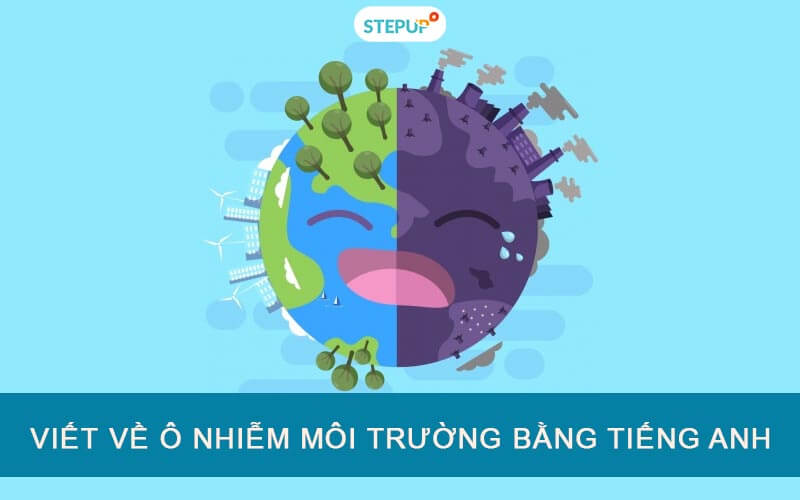
Gây ô nhiễm có nghĩa là làm cho môi trường bị suy giảm chất lượng hoặc hủy hoại bởi các tác động tiêu cực. Trong tiếng Anh thường nói “pollute the environment” (/pəˈluːt ði ɪnˈvaɪrənmənt/) — cụm động từ dùng để diễn tả hành động khiến đất, nước hoặc không khí bị ô nhiễm. Từ liên quan: pollute (/pəˈluːt/) (v), pollution (/pəˈluːʃən/) (n).
Từ đồng nghĩa: contaminate (/kənˈtæmɪneɪt/) (v). Một vài tính từ hữu ích: toxic (/ˈtɒksɪk/) (độc hại), polluted (/pəˈluːtɪd/) (bị ô nhiễm). Ví dụ tiếng Anh: “Plastic waste pollutes the ocean.” — Dịch: “Rác thải nhựa gây ô nhiễm đại dương.” Ví dụ khác: “Burn piles often do not result in full combustion of waste and pollute the environment.” — “Đốt đống thường không phân hủy hoàn toàn chất thải và gây ô nhiễm môi trường.”
Chất gây ô nhiễm — pollutant (/pəˈluːtənt/) (n): “Factory smoke is a major pollutant.” — “Khói nhà máy là một chất gây ô nhiễm chính.” Các từ liên quan khác: greenhouse gas emissions (/ˈɡriːnhaʊs ɡæs ɪˈmɪʃənz/), waste, emissions, affect. Hình ảnh minh họa gợi ý: ảnh bãi rác khói bụi hoặc bờ biển đầy rác nhựa (alt: landfill with smoke / polluted beach with plastic).

Environmental pollution in Vietnam and elsewhere is mostly caused by human activities, and we see it every day. Emissions from factories, exhaust from vehicles and the burning of fossil fuels release harmful gases into the air. These pollutants not only damage ecosystems but also contribute to global warming and make breathing difficult for people with respiratory problems.
When it comes to water, the main problems are industrial waste, untreated household sewage and runoff from farms carrying pesticides and fertilizers. Mining and coastal littering, especially plastic waste, choke rivers and seas, killing fish and contaminating drinking water. Communities suffer when wells and fisheries are polluted, and cleanup can be expensive and slow.
Poor waste-disposal systems, rapid urban growth and deforestation make things worse, while weak regulations and a lack of public awareness delay fixes. The health impacts include respiratory illnesses, water-borne diseases and loss of livelihoods for farmers and fishers. By improving treatment facilities, reducing single-use plastics and choosing cleaner transport, we can start to turn the tide together.
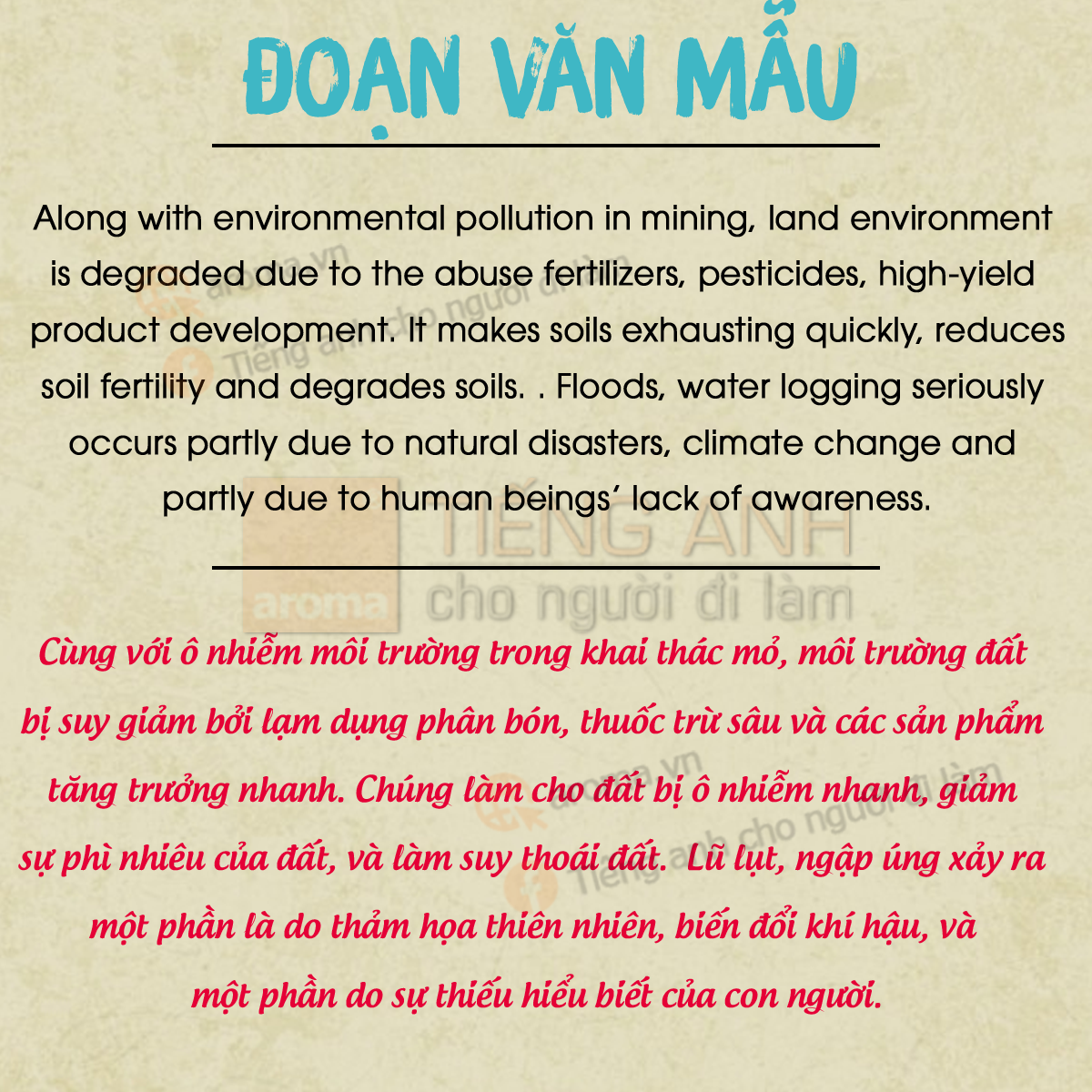
Environmental pollution harms virtually every living thing on Earth and affects our daily life in obvious ways. Air pollution, for example, damages the respiratory system and raises the risk of asthma and heart disease. Contaminated water spreads infections and makes drinking unsafe, so people suffer from repeated illnesses and lost productivity.
Pollutants in rivers and seas choke aquatic life, cause algal blooms, and create dead zones where fish cannot survive. Soil contamination reduces crop yields and contaminates food, threatening food security and farmers’ incomes. Loss of biodiversity also weakens ecosystems, making them less able to recover from shocks like floods or droughts.
Besides health and environmental damage, pollution hits economies hard through healthcare costs, lower harvests, and lost tourism. Climate-changing emissions add longer-term risks, including extreme weather and rising sea levels that disproportionately affect the poor. We can ease these consequences by cutting waste, treating industrial discharges, and choosing cleaner energy and transport.
Environmental pollution is a growing problem that affects our air, water, soil and even soundscapes. We often hear about air and water pollution, but soil and noise pollution are just as harmful. Talking about these issues helps students practice English and understand what’s at stake in everyday life.
Many causes contribute to pollution: untreated industrial waste dumped into rivers, agricultural runoff full of fertilizers and pesticides, and careless urban waste. Modern farming techniques and the overuse of chemicals damage soil quality, while factories and vehicles pump harmful substances into the air. Simple awareness often sparks change.
The effects are serious: aquatic life suffers from contaminated water, crops lose nutrients in polluted soil, and people face respiratory and other health problems. In places like Vietnam, rapid development can make pollution worse when regulations and waste treatment lag behind. Communities feel both economic and emotional impacts.
Preventing pollution needs small daily habits and big policies: treat industrial wastewater, promote sustainable agriculture, reduce single-use plastics, and improve public transport. Schools can teach students about recycling and conservation, while citizens vote for leaders who enforce environmental laws. Working together, we can protect nature for future generations.
Environmental pollution is a serious problem that affects our daily lives, especially in many cities and rural areas in Vietnam. We can see smog from traffic and factories, as well as dirty rivers filled with plastic and sewage. This situation makes people worried because clean air and water are basic needs for everyone.
One main cause is the rapid growth of vehicles and factories without enough control of emissions. Farmers sometimes use too much chemical fertilizer and pesticides, which pollute the soil and water. Littering and weak waste management also make the problem worse, harming animals and spreading diseases in communities.
To improve the situation, we can start with small actions: reduce plastic use, sort and recycle garbage, plant trees, and choose public transport or cycling when possible. Schools and families should teach children about caring for nature. Governments must enforce cleaner technology and stricter laws. If everyone does a little, our environment can recover faster.
Kết lại, hiểu rõ các từ vựng và cách diễn đạt về ô nhiễm môi trường bằng tiếng Anh không chỉ giúp chúng ta giao tiếp hiệu quả hơn trên bình diện quốc tế, mà còn làm sáng tỏ nguyên nhân, hậu quả để hành động thiết thực. Qua những ví dụ và đoạn văn ngắn, hy vọng bạn đã nắm được cách diễn đạt cơ bản và có thể tự tin viết, thuyết trình về vấn đề này. Mỗi kiến thức nhỏ kết hợp với từng việc làm thường ngày — giảm rác, tiết kiệm năng lượng, trồng cây — đều góp phần bảo vệ hành tinh. Hãy bắt đầu từ hôm nay, vì tương lai xanh cho chính chúng ta.


